
The Consent Form Upgrade: Protecting Your Practice in the Age of Biostimulators
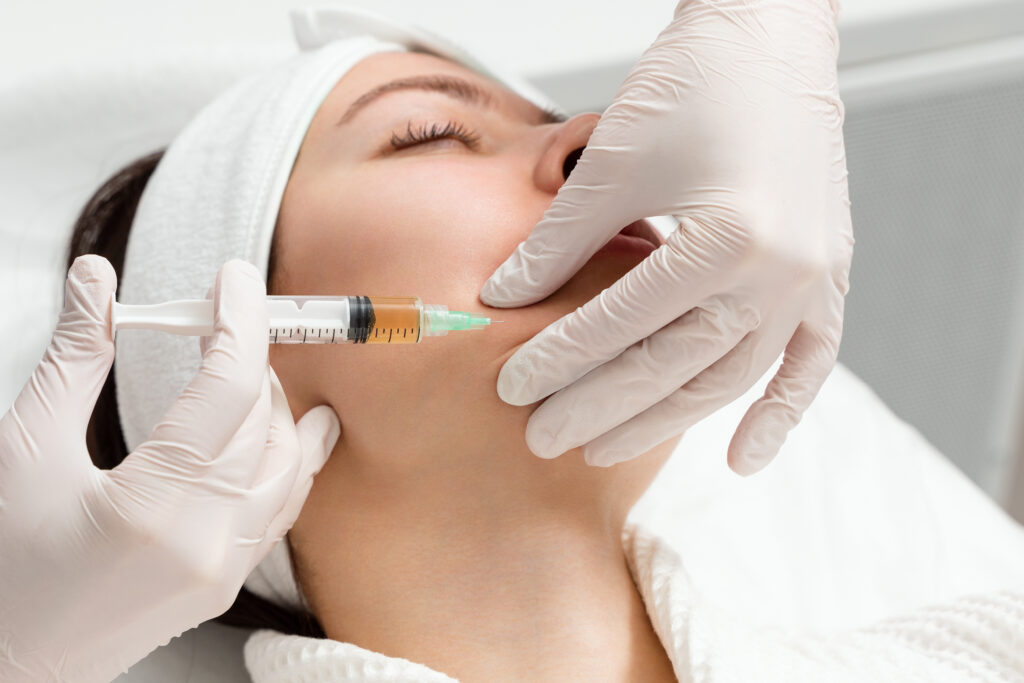
The aesthetic landscape is undergoing a seismic shift. For years, the industry was dominated by the “fill and freeze” mentality—using hyaluronic acid (HA) fillers to add immediate volume and neurotoxins to paralyze muscles. But today, the savvy patient is looking for something different. They want longevity, they want natural tissue regeneration, and they want “pre-juvenation.” Enter the age of Biostimulators.
Products like Poly-L-Lactic Acid (PLLA) and Calcium Hydroxylapatite (CaHA)—commercialized as Sculptra and Radiesse, respectively—are surging in popularity. Unlike their HA counterparts, these agents work by stimulating the body’s own collagen production over time. While this offers incredible, natural-looking results, it also introduces a unique set of legal and clinical risks.
If you are injecting biostimulators using a standard HA filler consent form, you are leaving your practice vulnerable. The mechanisms, timelines, side effects, and reversibility of these products are fundamentally different. It is time for a consent form upgrade.
In this guide, we will explore why generic forms fail in this new era and outline exactly what your biostimulator consent forms need to include to protect your patients and your practice.
The “One-Size-Fits-All” Fallacy
In many busy practices, paperwork is an afterthought. A standard “Dermal Filler Consent” is often used for everything from lip augmentation with Juvederm to jawline contouring with Radiesse. This is a dangerous oversight.
Informed consent is not just a signature on a page; it is a process of communication. Legally, a patient cannot provide informed consent if the document they sign describes a procedure that is materially different from the one they are receiving.
The Critical Differences
To understand why the paperwork must change, we must look at how the products differ:
- Reversibility: This is the most significant legal differentiator. If a patient dislikes their HA lip filler, an enzyme (hyaluronidase) can dissolve it in 24 hours. Biostimulators are not reversible. Once injected, the product and the subsequent collagen it creates are there until the body naturally metabolizes them, which can take years.
- Timeline of Results: HA fillers offer instant gratification. Biostimulators are a waiting game. A patient expecting to walk out looking 10 years younger will be disappointed with Sculptra, which requires months to show full effect.
- Adverse Events: The complication profile for biostimulators includes specific risks like nodules and granulomas that may appear months or even years after treatment—risks that are rare or behave differently with HA fillers.
If your consent form doesn’t explicitly highlight “irreversibility” or “delayed onset of results,” a dissatisfied patient has a strong argument that they were not fully informed.
5 Pillars of a Robust Biostimulator Consent Form
To bulletproof your practice, your consent forms for PLLA and CaHA must be specific, detailed, and distinct from your general filler forms. Here are the five pillars you must include.
1. The “No Eraser” Clause (Irreversibility)
The most common lawsuit in aesthetics stems from a disconnect between expectation and reality. If a patient hates the result of a biostimulator, you cannot simply dissolve it.
What to include: Your form must explicitly state that there is no known reversing agent for the product. Use bold language.
“I understand that unlike hyaluronic acid fillers, [Product Name] cannot be dissolved or reversed. If I am unhappy with the aesthetic outcome, the product must be allowed to metabolize naturally over time, which may take 2 years or longer.”
This manages expectations immediately. It forces the patient to pause and consider if they are ready for a long-term commitment.
2. The “Patience is a Virtue” Protocol (Timeline)
Biostimulators are often sold in packages of treatments (e.g., 3 vials over 3 months). Patients often forget this after the first session when they don’t see a dramatic change.
What to include: You need a section detailing the mechanism of action. Explain that the carrier fluid (sterile water or saline) will absorb in a few days, causing the patient to look like they have returned to baseline before the collagen production kicks in.
“I understand that the immediate volume observed after injection is largely due to the fluid used to reconstitute the product and swelling. This will subside within 2-7 days. True results rely on my body’s collagen production and typically become visible 4-6 weeks after treatment, continuing to improve for several months.”
This clause protects you from the angry phone call three days post-op asking, “Where did my results go?”
3. Nodule and Granuloma Specifics
While modern preparation techniques (like higher dilution ratios for Sculptra) have drastically reduced the incidence of nodules, they remain a known risk. Unlike a simple HA lump that can be massaged away easily, a biostimulator nodule can be stubborn and may require steroid injections or surgical excision.
What to include: Differentiate between palpable (can be felt) and visible nodules.
“I understand that small bumps or nodules may form under the skin. These may be palpable but not visible, or in rare cases, visible. While often treatable with massage or steroid injections, some nodules may be permanent or require surgical removal.”
4. The Massage Requirement (The 5-5-5 Rule)
For PLLA (Sculptra) specifically, patient compliance is medically necessary. The “5-5-5 Rule” (massage for 5 minutes, 5 times a day, for 5 days) is crucial for even distribution and nodule prevention. If a patient fails to do this and develops a lump, your documentation protects you—but only if you emphasized it.
What to include: Make this a distinct checkbox, not just a line in a paragraph.
“I agree to strictly follow the post-treatment massage protocol (5 minutes, 5 times a day, for 5 days) to ensure proper product distribution. I understand that failure to do so increases the risk of nodule formation.”
5. Hyper-Dilution and Off-Label Usage
The aesthetic industry moves faster than FDA approval. Many expert injectors use “hyper-dilute” Radiesse for neck and body skin tightening, or use Sculptra in areas like the buttocks or knees. These are often off-label uses.
What to include: You must explicitly state that the application is off-label but based on expert consensus and clinical evidence.
“I understand that the use of [Product Name] in the [Body Area] is an off-label application, meaning it has not been specifically approved by the FDA for this area, though it is a common practice in aesthetic medicine. I accept the specific risks associated with this off-label use.”
The Consultation: Where the Form Comes to Life
A perfect legal document is useless if the patient doesn’t read it. We have all been guilty of handing a patient a clipboard (or an iPad) and saying, “Just sign here, here, and here.” In the age of biostimulators, this habit must break.
The “Teach-Back” Method
During your consultation, use the consent form as a teaching tool. When you reach the section on irreversibility, stop and ask the patient, “So, if you don’t like the volume in two weeks, what are our options?”
If they say, “You can dissolve it,” you know they haven’t understood. Correct them immediately. This “teach-back” method ensures that the consent is truly informed.
Managing “Filler Fatigue”
Many patients coming for biostimulators are transitioning from years of HA fillers. They may have “filler fatigue” or overfilled faces. Your consent process needs to address the interaction between old fillers and new biostimulators.
If you are layering products, your consent should note that the interaction between different types of implants (HA vs. CaHA vs. PLLA) carries theoretical risks of inflammatory reactions. Transparency is your best shield.
Digital Documentation: The Modern Standard
If you are still using paper charts, you are at a disadvantage. Electronic Medical Records (EMR) specifically designed for aesthetics offer features that enhance your legal protection.
- Version Control: Laws change, and product guidelines change. Digital systems ensure that every patient signs the most current version of your consent form, automatically archiving old versions.
- Mandatory Fields: You can set your digital forms to prevent submission unless specific checkboxes (like the “No Reversal” clause) are ticked. This prevents the “I didn’t see that part” defense.
- Time Stamps: In the event of a lawsuit, a digital time stamp proves the patient signed the consent form before the procedure began, not hastily afterwards.
Conclusion: Consent is Culture
Upgrading your consent forms isn’t just about avoiding a lawsuit; it’s about elevating your standard of care.
When you present a detailed, specific consent form for a biostimulator, you signal to the patient that this is a serious medical procedure, not a casual beauty treatment. You demonstrate expertise by acknowledging the nuances of the product.
The age of biostimulators offers tremendous opportunities to grow your practice and deliver long-lasting, natural results. However, these powerful tools demand a higher level of respect and clearer communication.
Action Plan for Practice Owners:
- Audit: Pull your current consent forms today. Do you have a specific form for Sculptra and Radiesse, or are they lumped under “Fillers”?
- Edit: Incorporate the clauses regarding irreversibility, delayed onset, and massage protocols immediately.
- Train: Hold a staff meeting. Ensure every provider and coordinator knows how to verbally explain these risks during the consultation.
- Consult Legal Counsel: Always have a healthcare attorney review your forms to ensure compliance with your specific state laws.
By treating your paperwork with the same precision as your injections, you protect your license, your reputation, and most importantly, your patients.
Disclaimer: This blog post is for informational purposes only and does not constitute legal or medical advice. Always consult with a qualified healthcare attorney to draft legal documents for your medical practice.